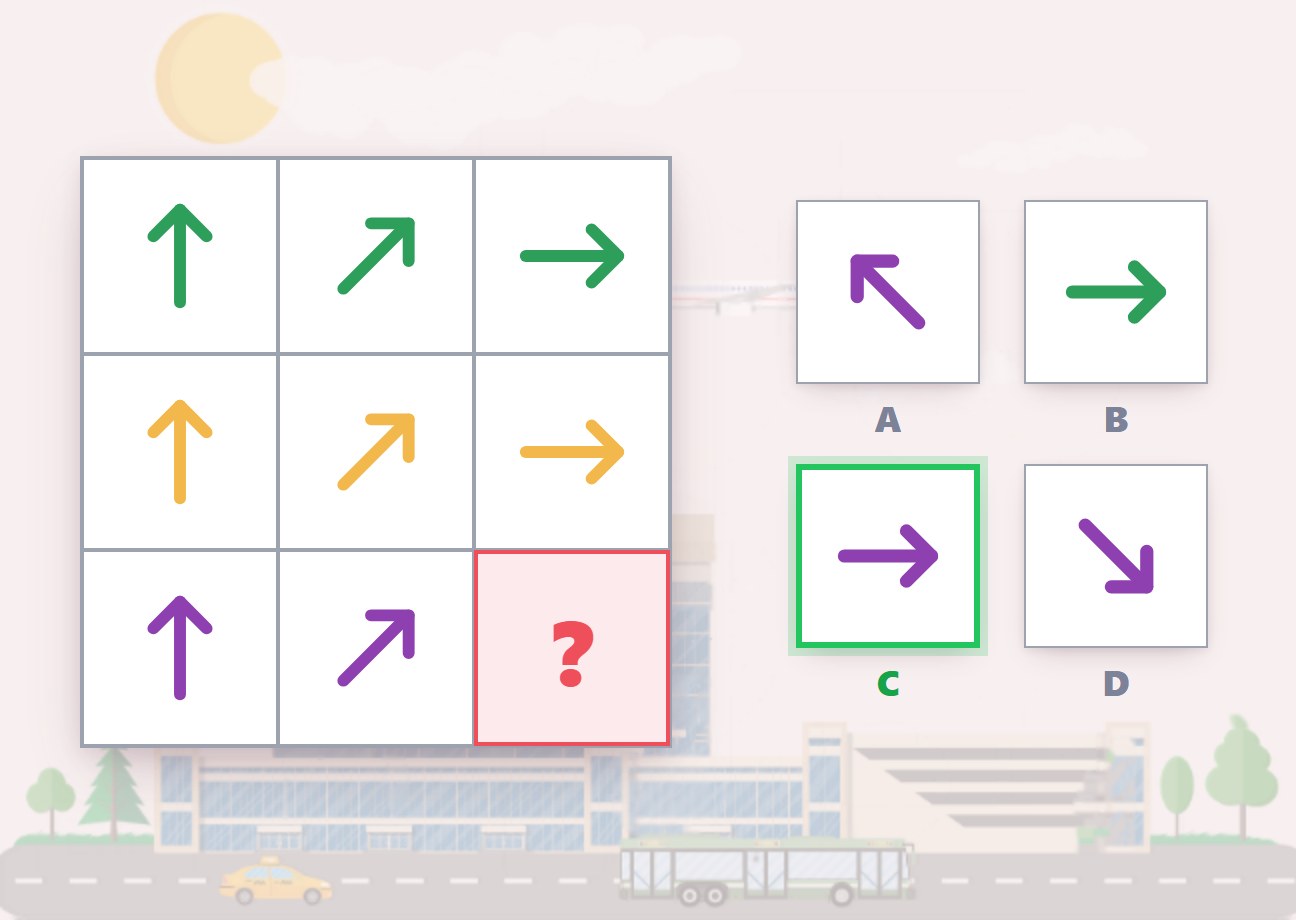
Every question opens with two reference grids that obey the same hidden rule — and the rule is never named. Below them sit four candidates, and exactly two of them obey it as well. Find those two. A third click drops your oldest selection, and there is no partial credit: one right out of two scores what none does.
You are looking at one test.
The academy runs 19.
Wizz Air Pilot Academy screens across the whole Aon and TestAir360 set. Preparing for a single module leaves the rest untouched — the bundle opens every one of them, on one account.
- Every Aon reasoning module and the full TestAir360 battery
- Same autopilot walkthroughs and performance report on each
- One purchase, one login, nothing to add later
You keep 2 718 TL · 72% less
See the full set 30-day access shown · 90 and 365-day plans on the bundle pageTwenty rules.
Two examples each.
The test never tells you the rule; it hands you two grids that obey it and expects you to reconstruct it from those alone. The pool is finite — twenty rules in six families — so preparation is not about being cleverer on the day, it is about recognising a family in seconds. The five steps below are the order in which they are worth learning.
Two references, four candidates — and exactly two fit
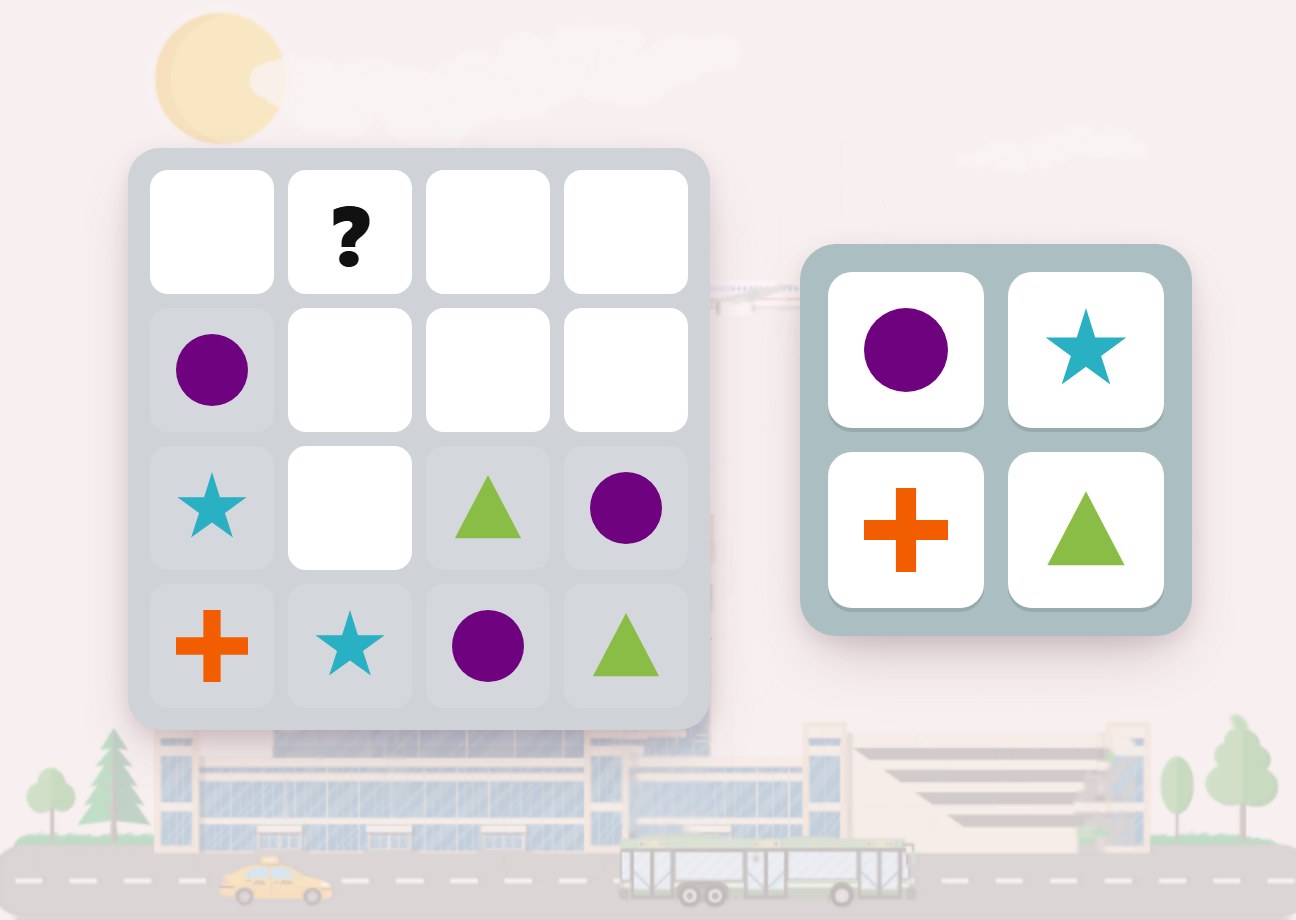
Every question opens with two reference grids. Both obey the same hidden rule, and the rule is never named. Below them sit four candidates, A to D, and exactly two of them obey it as well. Two examples is deliberately thin evidence: any pair of grids has more than one thing in common, so what is being measured is not spotting a shared feature but finding the one that splits the four candidates cleanly in half.
Fifteen questions.
Twenty-four seconds each.
The test never states the rule; it shows you two grids that obey it. What is measured is whether you can move from that thin evidence to the rule and then apply it without slipping — under a clock that leaves about twenty-four seconds a question. Only fully correct questions count: one selection right out of two scores the same as none.
The rule is never handed to you.
You are shown two grids that obey a rule, not the rule itself — and two examples always share more than one feature. Reaching the one that matters is the whole task; nothing here rewards recall or general knowledge.
Confirm on both, then refute on a candidate.
A hypothesis that fits both references can still be wrong — two grids always have several features in common. Showing that it fails on one of the four candidates is the step candidates skip, and the most expensive omission in the test.
Cheap checks first, symmetry last.
Twenty rules will not fit into twenty-four seconds, so the order carries the work: the four corners, then a missing shape, then rows and columns, then repeats and counts — and only then symmetry and the diagonals.
Thirty seconds, then move on.
In the timed modes there is no way back: the question strip is an indicator, not a control. A stall therefore costs the questions behind it as well, and the score curve is steepest in the middle — two easy questions are worth more than one stubborn one.
Let every session write your next study plan.
Every Inductive Logical Reasoning session you finish is broken down automatically. See more than the right–wrong ratio: which of the six rule families cost you, whether your accuracy held into the second half, and whether the questions you lost were ones you got wrong or ones the clock never let you open.
Time per question and pace
Every question’s duration and your median, so you can see where the six minutes actually went.
Accuracy across the six families
How many questions each rule family produced and how many you got right — the fastest way to find the family that is costing you.
Endurance and consistency
First half against second half accuracy, and how much your per-question times swing. A wide swing means you are getting stuck rather than skipping.
Reference reading and unopened questions
Whether your wrong pairs were consistent — a rule inferred and applied faithfully, just the wrong rule — or scattered, which means no rule was found at all. The two score the same and need opposite practice. Unopened questions are marked separately: a knowledge gap and a time-management gap need different fixes.
No reviews yet.
This module has just been published. Verified reviews from CADETPRO students appear here automatically as they come in — we do not write them ourselves and we do not display placeholder ratings.
✓CADETPRO course data — real student reviews, read live from the course record. Names shortened for privacy.
Frequently Asked Questions
For anything not covered here, get in touch:
info@cadetpro.com →The whole selection process, step by step:
Wizz Air Pilot Academy guide →What is the inductive logical reasoning test in the Wizz Air Pilot Academy selection process?
Each question shows two reference grids — a plain 3x3 grid of shapes, upright rather than rotated — that both obey the same hidden rule, and the rule is never named. Below them sit four candidates, A to D, and exactly two of them obey it as well; your job is to pick those two. There are fifteen questions in six minutes, the timed modes run forward only, and a question counts only when both of your selections are right.
How is it different from the inductive logical thinking test?
They are two separate tests and CADETPRO ships a module for each. Inductive logical thinking gives you six patterns already sorted into two classes on a grid rotated 45 degrees into a diamond, and asks you to classify four more. Inductive logical reasoning gives you two references on an upright grid and asks which two of four candidates follow the same rule. The rule catalogues, the question counts and the time limits all differ, so practise them separately.
Is the demo on this page the real module?
Yes. The player and the walkthrough panels load the same module you get after purchase, straight from hub.cadetpro.com. The free EASY and MEDIUM modes are open without buying anything, and both give feedback after every question so you can learn the rule families.
What is the difference between the four modes?
EASY gives you 6 questions with no time limit, feedback after each one, and only the six tier-1 rules. MEDIUM moves to 15 questions, still untimed and with feedback, and adds the tier-2 rules for thirteen in total. HARD is 15 questions in 06:00 with no feedback during the test but a review at the end, and all twenty rules are in play. EXAM is the same 15 questions in 06:00 with no feedback at all — real conditions.
How is the score worked out?
The score is a percentage built from how many questions you answered fully correctly; finishing early does not raise it. There is no partial credit, so one right selection out of two scores what none does. The curve is flat at the bottom — one, two, three or four correct out of fifteen all score 10 — and steepest in the middle, where going from six correct to nine is worth twenty-six points. Any test with a mistake in it is capped at 98.
Which devices does it work on?
Any modern browser on desktop, tablet or phone. Answering is a tap on two of the four candidate grids. A larger screen genuinely helps here, because the two references and the four candidates are read side by side and the shapes are small.
What do I get after purchase and for how long?
PRO access opens the HARD and EXAM modes and the advanced sections of the performance report, including the family-by-family breakdown and the reference-reading consistency measure. Access runs for the period you choose — 30, 90 or 365 days — and renews automatically for the same period unless you cancel.
Is this an official Wizz Air or Aon product?
No. CADETPRO is an independent preparation platform and has no affiliation with, endorsement from or partnership with Wizz Air or Aon. The module reproduces the publicly described format of the test so you can practise it; it is not the assessment itself, and no result here guarantees any outcome in a real selection process.
The rest of the Wizz Air Pilot Academy set
Take the modules you need one at a time — each one has its own page, its own engine and its own report.
FULL SETWizz Air Test ALL IN ONE
All nineteen Wizz Air modules in one purchase — reasoning, ADAPT and TestAir360.
PRODeductive Logical Reasoning PRO
One symbol per row and column, one question mark, six minutes.
PROInductive Logical Thinking PRO
Six patterns, already split into two classes. Find the rule, classify four more.
PROLogical Thinking PRO
Nine objects in a row. Eight follow one hidden rule — mark the one that does not.
PROAbstract Logical Reasoning PRO
Four panels, then a question mark — work out what comes fifth.
PRODiagrammatic Reasoning & Raven PRO
A matrix with one cell missing — find the rule, fill the gap.
PRONumerical Reasoning PRO
A data panel, one claim about it — true, false, or cannot say.
PROCube Folding PRO
Six squares, folded in your head — then find the cube.
PROVerbal Reasoning PRO
True, False or Cannot say — and absence is never falsehood.
PROADAPT: Cognitive Test PRO
Six abilities, one sitting — and the profile it leaves behind.
PROTestAir360: Clocks PRO
Four seconds of dials — then you answer from memory.
PROADAPT: FAST Multitasking PRO
One flight, four channels — and none of them waits.
PROTestAir360: Compass PRO
One reference letter, one green arrow — and never more than four ticks between them.
PROTestAir360: Reverse Numbers PRO
Four to six digits, nothing on screen, and no second chance to listen.
PROTestAir360: Eye-Hand Coordination PRO
One plank, two keys, and a centre that will not hold still.
PROTestAir360: Mental Arithmetic PRO
The equation is spoken. Nothing is written down.
PROTestAir360: Short-Term Memory PRO
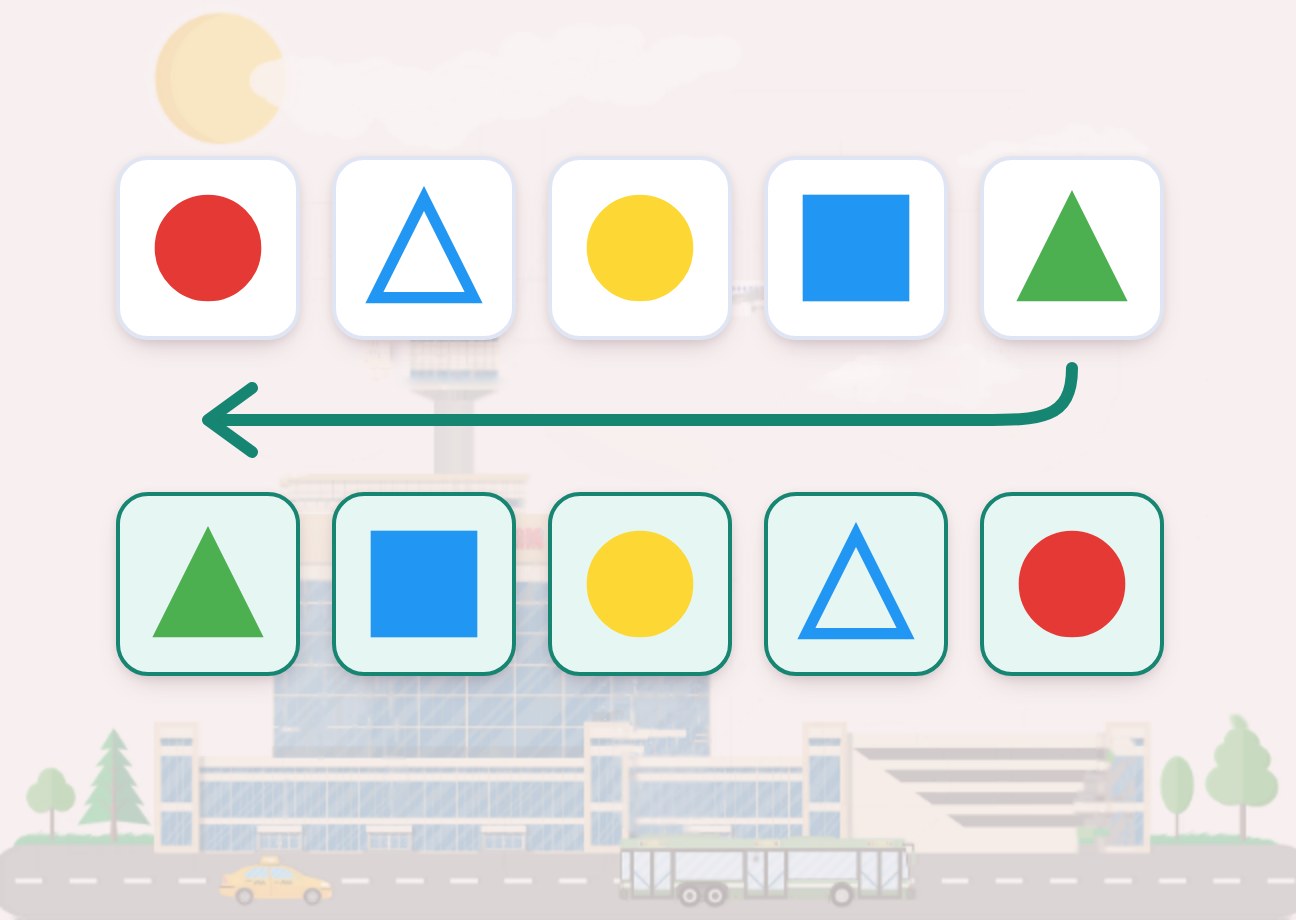
Shapes appear two seconds each. Then you rebuild the run in reverse.
PROTestAir360: Time Orientation PRO
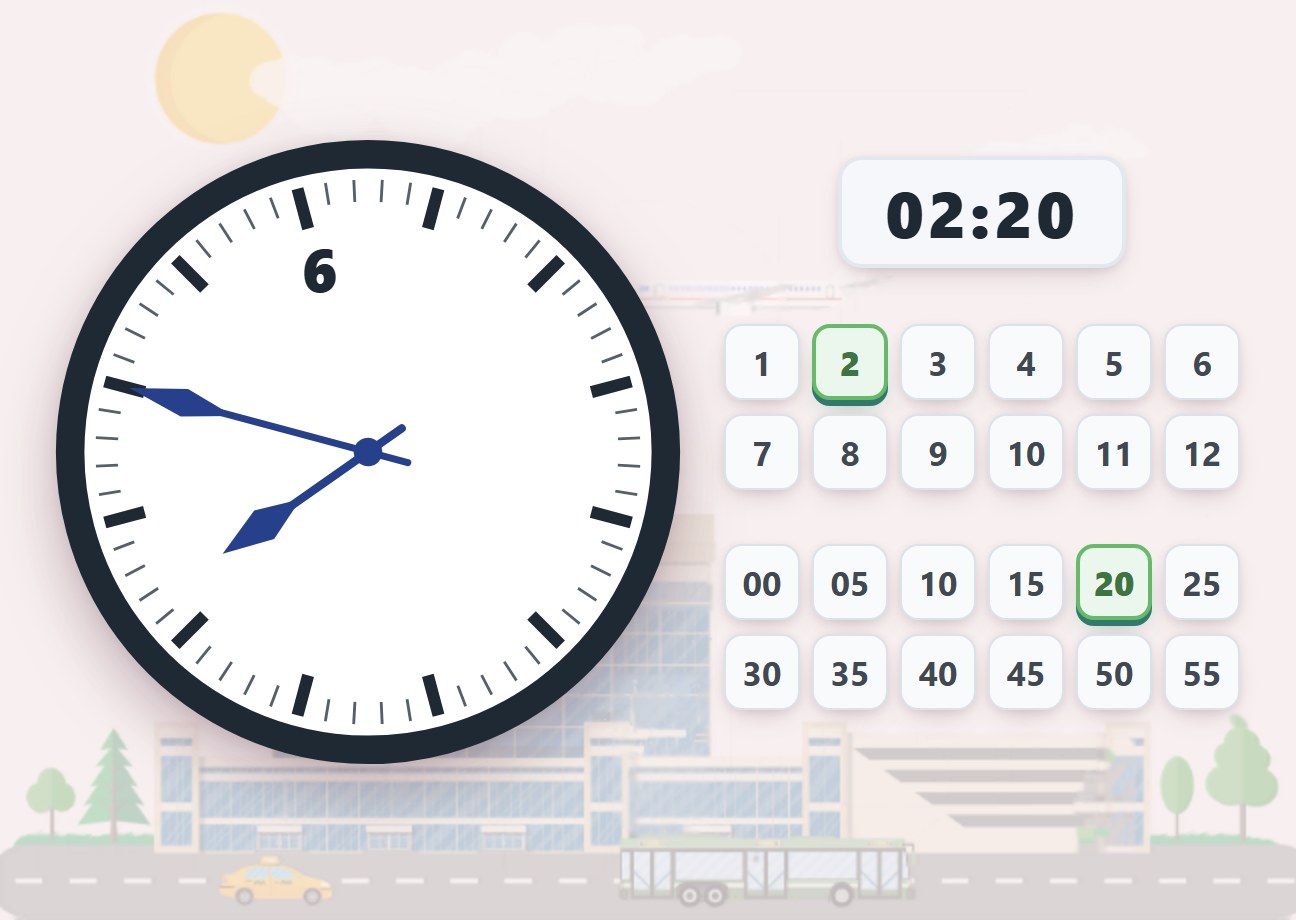
Find the twelve before you read the hands. The clock is rotated every time.
PROTestAir360: Spatial Orientation PRO
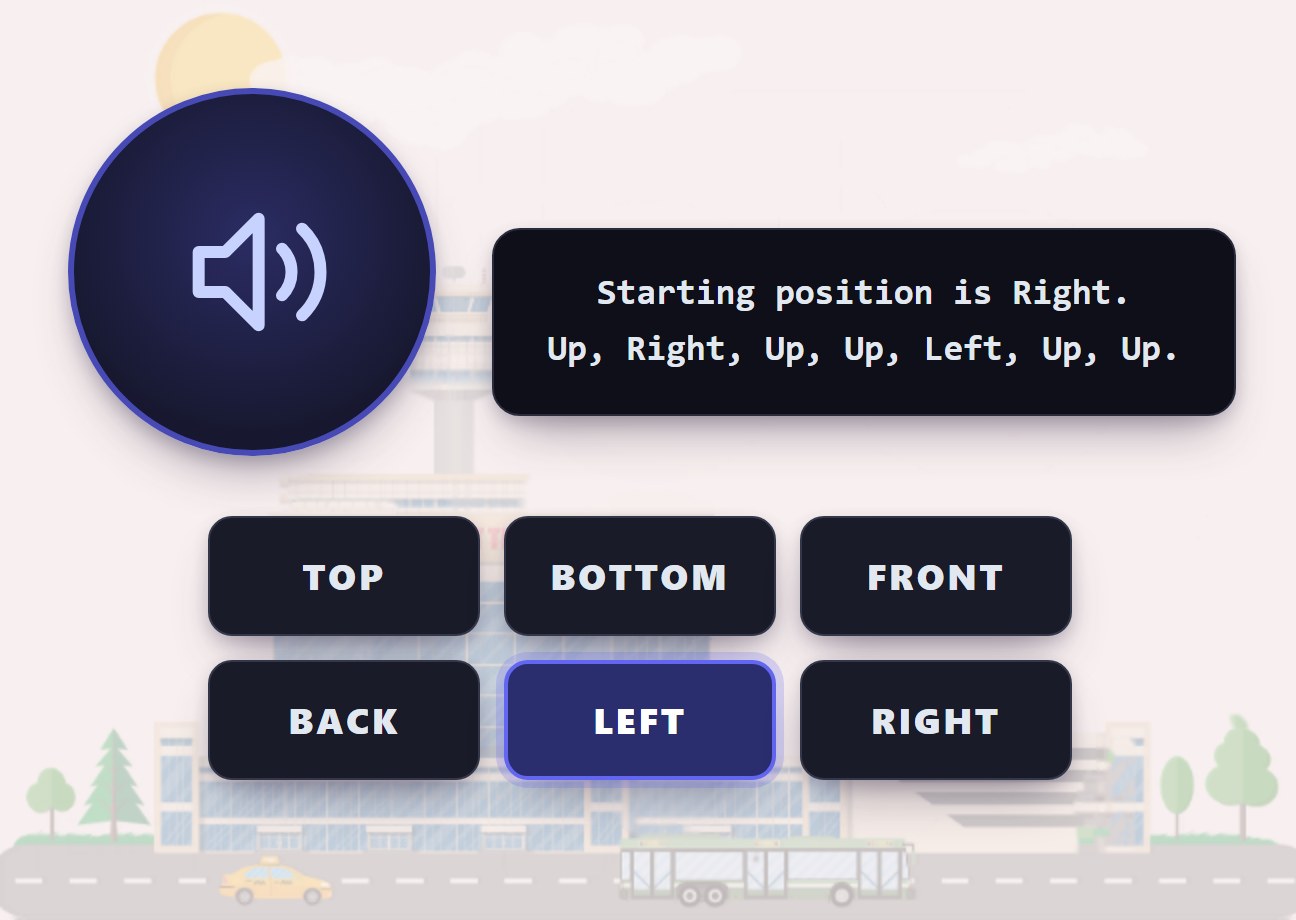
A voice names one face of a cube and reads the rotations. You name where the mark ended.
GUIDEWizz Air Pilot Academy Guide
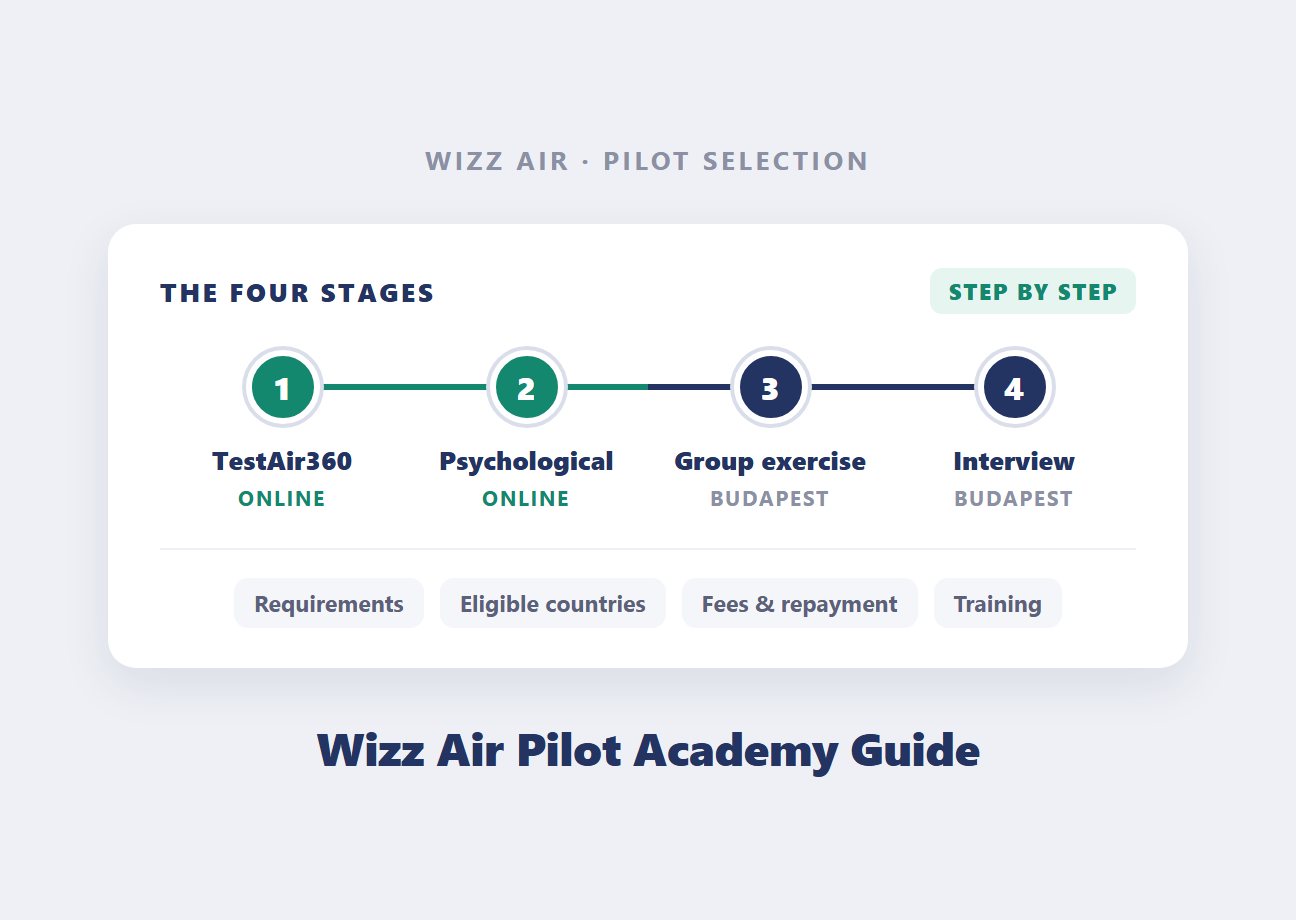
Requirements, the four selection stages, fees and repayment.