Turn your sound on. Every question is one spoken sentence in a fixed shape: “Starting position is Bottom. Down, Up, Down.” Then you pick the face the mark finished on from six buttons that never change or reorder. There is nothing to read and nothing to look at, so the whole task happens between your ears. Two rules make it tractable: every rotation leaves two of the six faces untouched, and the same direction is never immediately followed by its opposite — so each new word has three possibilities, not four. Chains run from 3 to 14 rotations, and there is no timer anywhere. In the three practice modes you can replay a sentence as often as you like; in EXAM it plays once and the replay button is not on the screen at all.
WIZZ AIR
TestAir360: Spatial Orientation
Independent preparation for the Spatial Orientation test in the Wizz Air Pilot Academy selection process. A voice tells you which face of a cube is marked and then reads a list of rotations. Nothing is written on screen and no cube is drawn — you turn it in your head and name the face the mark ends on. Chains run from 3 to 14 rotations, and the EXAM round is 15 questions with no time limit at all.
- Phone, tablet & PC
- Performance analytics
- Headphones recommended
You are looking at one test.
The academy runs 19.
Wizz Air Pilot Academy screens across the whole Aon and TestAir360 set. Preparing for a single module leaves the rest untouched — the bundle opens every one of them, on one account.
- Every Aon reasoning module and the full TestAir360 battery
- Same autopilot walkthroughs and performance report on each
- One purchase, one login, nothing to add later
You keep 2 718 TL · 72% less
See the full set 30-day access shown · 90 and 365-day plans on the bundle pageNothing is drawn.
You turn it in your head.
The sentence is always built the same way, so there is no comprehension to do — only tracking. A face is named, then a list of rotations is read, and the only question is where the mark ended. What makes it hard is that the cube exists nowhere except in your head, and the rotations do not commute: up then right and right then up finish in different places. The five steps below are the order in which they are worth learning, and the second one takes one word in three out of the job.
One sentence, always the same shape
Every question is one spoken sentence built the same way: a carrier (“Starting position is Back.”) and then the rotations, one word each. The carrier runs 1.57–1.7 s, then 1.07 s of silence — that pause is your setup time, the only moment in the question when nothing is arriving. Directions follow with 0.11–0.25 s gaps, and the final one is always about 56–74 ms longer, so you hear the list end instead of waiting for a word that is not coming. The shortest question is 4.94 s, the longest 12.39 s, and a full EXAM round is 111.26 s of audio. Nothing is written on screen and no cube is ever drawn. How many times you get to hear it depends on the mode: the three practice modes let you replay a sentence as often as you like, while in EXAM each question plays exactly once and the replay button is not put on the screen at all. An audio failure is the one exception everywhere — that is a repair, not a replay, and Retry does not count against you.
Not a memory test.
A rotation test.
Holding four words is easy; holding a changing object across fourteen of them is not. That is the separation this task is built for, and it is why the obvious shortcut — counting the ups against the downs — is measured here rather than assumed. It works on the short chains and dies on the long ones, and the exam is ordered so that it stops working exactly where the questions get heavy. Underneath the score the module records which chain length your accuracy starts falling at, which faces you confuse, and whether your wrong answers still match the counting model.
Nothing on screen. The whole task arrives as sound.
The sentence is spoken and never written, and no cube is drawn — there is nothing to look at while you work. A question runs 4.94–12.39 s and a full EXAM round is 111.26 s of audio. The three practice modes let you replay a sentence as often as you like; in EXAM each question plays exactly once and the replay button is not put on the screen at all. So before a single rotation has happened, the task is already measuring something a figure test never reaches: whether you can hold a spoken list while doing something else with it.
Every rotation leaves two faces alone.
Up and down never move left or right; left and right never move top or bottom. So a share of the words you hear change nothing at all, and recognising them is the largest saving on offer: measured across every chain length it is 4.67 idle steps in a fourteen-rotation question, one rotation in three. The catch is that front and back have no safe direction whatsoever — all four rotations move them — so the saving disappears entirely for as long as the mark is sitting on one of those two faces, which is exactly when the chain feels hardest.
The counting shortcut has a cliff, not a slope.
Counting the ups against the downs answers 40.55% of three-rotation questions correctly, well clear of the 16.67% you get by guessing, so it feels like a technique long before it fails. By nine to eleven rotations it is 17.21%, and by twelve to fourteen 16.57% — the guessing line. It does not degrade; it stops being a method. EXAM is ordered so that it is rewarded early and abandoned late, which is why the report checks whether your wrong answers still match what the counting model would have said.
A question you never heard is not one you got wrong.
The score is the number you answered correctly divided by the number of questions whose audio actually played, not by the number asked. An EXAM round of 15 questions in which one clip fails is scored out of 14. Nothing is deducted for a wrong answer, and time never enters the score at all — there is no timer in any of the four modes. Time is still recorded, which is the more useful way round: once accuracy is where you want it, how long each chain costs you is the number that shows whether the method has actually become automatic.
Fifteen questions. Eleven things recorded about each one.
Every question is stored as what it actually was and what you actually did with it: the starting face, the full list of rotations in the order you heard them, how long the clip ran, how long you took to answer, which of the six faces you chose, whether the audio played cleanly, and how many times you replayed it. Nothing on this page is a summary of a summary — the analysis is rebuilt from those 11 fields, which is why it can tell you where your accuracy falls rather than only that it did.
Accuracy by chain length — the line that matters
A single percentage hides the only thing worth knowing here, because almost everyone is close to perfect at three rotations. Every question carries its own rotation count, so your accuracy is drawn against chain length instead of averaged flat: the reading is the point where your line turns down — at six, at nine, or not until twelve.
Which face you actually chose
A wrong answer is kept as the face you picked, not just as a miss. That distinction is the diagnosis: landing on the opposite face means a direction went the wrong way, landing on the face you started from means the chain was dropped early, and landing on a neighbour usually means one rotation in the middle was lost.
Whether your wrong answers still match the counting model
Counting the ups against the downs produces one specific answer for every question. Because the whole rotation list is stored, your answer can be compared with what that shortcut would have said — which is how you find out you are still leaning on it at eleven rotations without having decided to.
Time taken, and replays used
There is no timer, so time here is diagnostic rather than scored: response time per rotation separates a chain that is costing you effort from one that is costing you confidence. Practice replays are counted as well, and watching that count fall across a session is the plainest evidence that the method is becoming automatic.
No reviews yet.
This module has just been published. Verified reviews from CADETPRO students appear here automatically as they come in — we do not write them ourselves and we do not display placeholder ratings.
✓CADETPRO course data — real student reviews, read live from the course record. Names shortened for privacy.
Frequently Asked Questions
For anything not covered here, get in touch:
info@cadetpro.com →The whole selection process, step by step:
Wizz Air Pilot Academy guide →What is the TestAir360: Spatial Orientation test in the Wizz Air Pilot Academy selection process?
It is a mental-rotation test delivered entirely as audio. A voice names the marked face of a cube and then reads a list of rotations — “Starting position is Back. Up, Left, Left.” — and you name the face the mark finished on, choosing from six buttons that never change or reorder. Nothing is written on screen and no cube is drawn, so the object exists only in your head. Chains run from 3 to 14 rotations, an EXAM round is 15 questions and 106 rotations in total, and there is no time limit anywhere in it.
Is there a time limit?
No. There is no timer in any of the four modes and time never enters the score. What is bounded is the audio: a question is 4.94–12.39 s of speech and a full EXAM round is 111.26 s. Your time per question is still recorded, but as diagnosis rather than as a penalty — it is the number that shows whether a chain cost you effort or only confidence.
Which keys does it use?
You can answer with the mouse or from the keyboard. Number keys 1 to 6 pick a face directly, in the order the six buttons are shown, and the arrow keys move the focus between them. In the practice modes R replays the current sentence. In EXAM there is no replay key and no replay button, because each question plays exactly once.
How is the score worked out?
Correct answers divided by the number of questions whose audio actually played, multiplied by 100. So an EXAM round of 15 questions in which one clip failed is scored out of 14, not 15 — a question you never heard cannot count against you. Nothing is deducted for a wrong answer, and there is no time component of any kind.
What are the four modes, and which of them can I try here?
EASY is 10 questions (58.8 s of audio, averaging 4.1 rotations), MEDIUM 12 (91.72 s, 7.5), HARD 12 (108.34 s, 10.17) and EXAM 15 (111.26 s, 7.07). All four are open in the player on this page, with no sign-up. HARD is the heaviest of them; EXAM is the mixture rather than the peak, opening with three 3-rotation questions and ending on a 14-rotation one.
Can I just count the ups against the downs?
It works, and then it stops working. On three-rotation questions counting answers 40.55% correctly against 16.67% for a blind guess. By nine to eleven rotations it is 17.21%, and by twelve to fourteen 16.57% — the guessing line. In EASY it scores about 32%, which is exactly why it feels like a method worth keeping. Walking the list one word at a time is the only approach that survives the long chains, so it is worth building from the first question rather than after the shortcut fails.
Can the same direction be said twice in a row?
Twice in a row is possible, but a direction is never immediately followed by its opposite: after “up” the next word can only be up, left or right. Across 930 000 consecutive pairs there were 0 exceptions. That cuts every step from four possibilities to three, and it is a large part of why a fourteen-rotation chain is trackable at all.
What happens if the audio does not play?
It is treated as a repair rather than as a replay. A Retry button appears and you get up to three attempts, in every mode including EXAM, and using it does not count as having replayed the sentence. If the clip still cannot be played, that question is left out of the score’s denominator instead of being marked wrong.
Is the demo on this page the real module?
Yes. The player above loads the same module from hub.cadetpro.com that PRO subscribers use, inside a sandboxed frame, with no sign-up, and all four modes are open in it. What PRO adds is the detailed analysis after each round — accuracy drawn against chain length, which face you actually picked when you were wrong, whether those wrong answers still match the counting model, and the time and replays each chain cost you — together with unlimited access across the whole Wizz Air module set.
Is this an official Wizz Air product?
No. CADETPRO is an independent preparation platform. It is not affiliated with, endorsed by or connected to Wizz Air or Aon in any way, and it does not promise a pass or a job. What it provides is practice against a faithful reproduction of the task and a detailed report on how you performed.
The rest of the Wizz Air Pilot Academy set
Take the modules you need one at a time — each one has its own page, its own engine and its own report.
FULL SETWizz Air Test ALL IN ONE
All nineteen Wizz Air modules in one purchase — reasoning, ADAPT and TestAir360.
PROTestAir360: Clocks PRO
Four seconds of dials — then you answer from memory.
PROTestAir360: Compass PRO
One reference letter, one green arrow — and never more than four ticks between them.
PROTestAir360: Reverse Numbers PRO
Four to six digits, nothing on screen, and no second chance to listen.
PROTestAir360: Eye-Hand Coordination PRO
One plank, two keys, and a centre that will not hold still.
PROTestAir360: Mental Arithmetic PRO
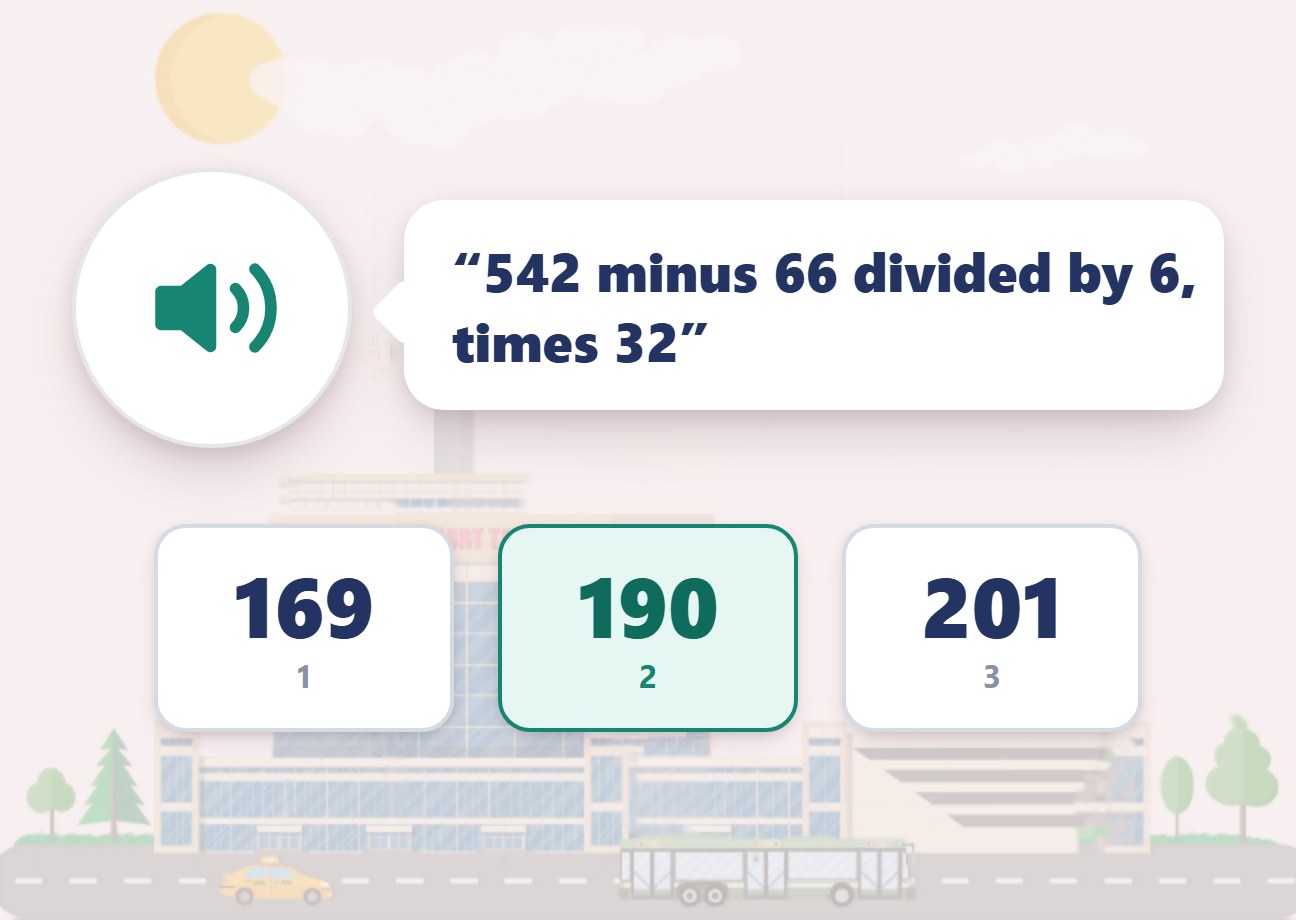
The equation is spoken. Nothing is written down.
PROTestAir360: Short-Term Memory PRO
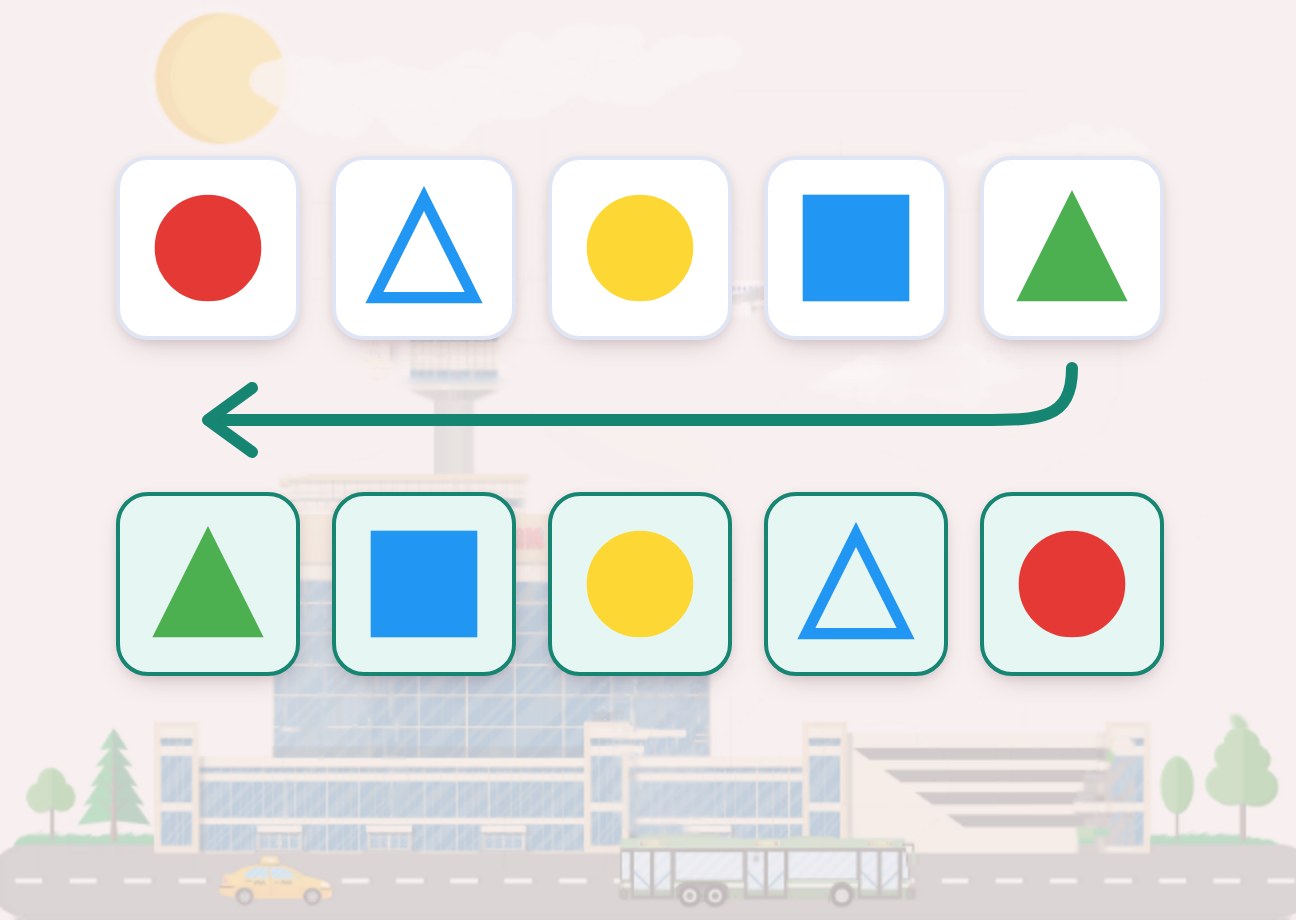
Shapes appear two seconds each. Then you rebuild the run in reverse.
PROTestAir360: Time Orientation PRO
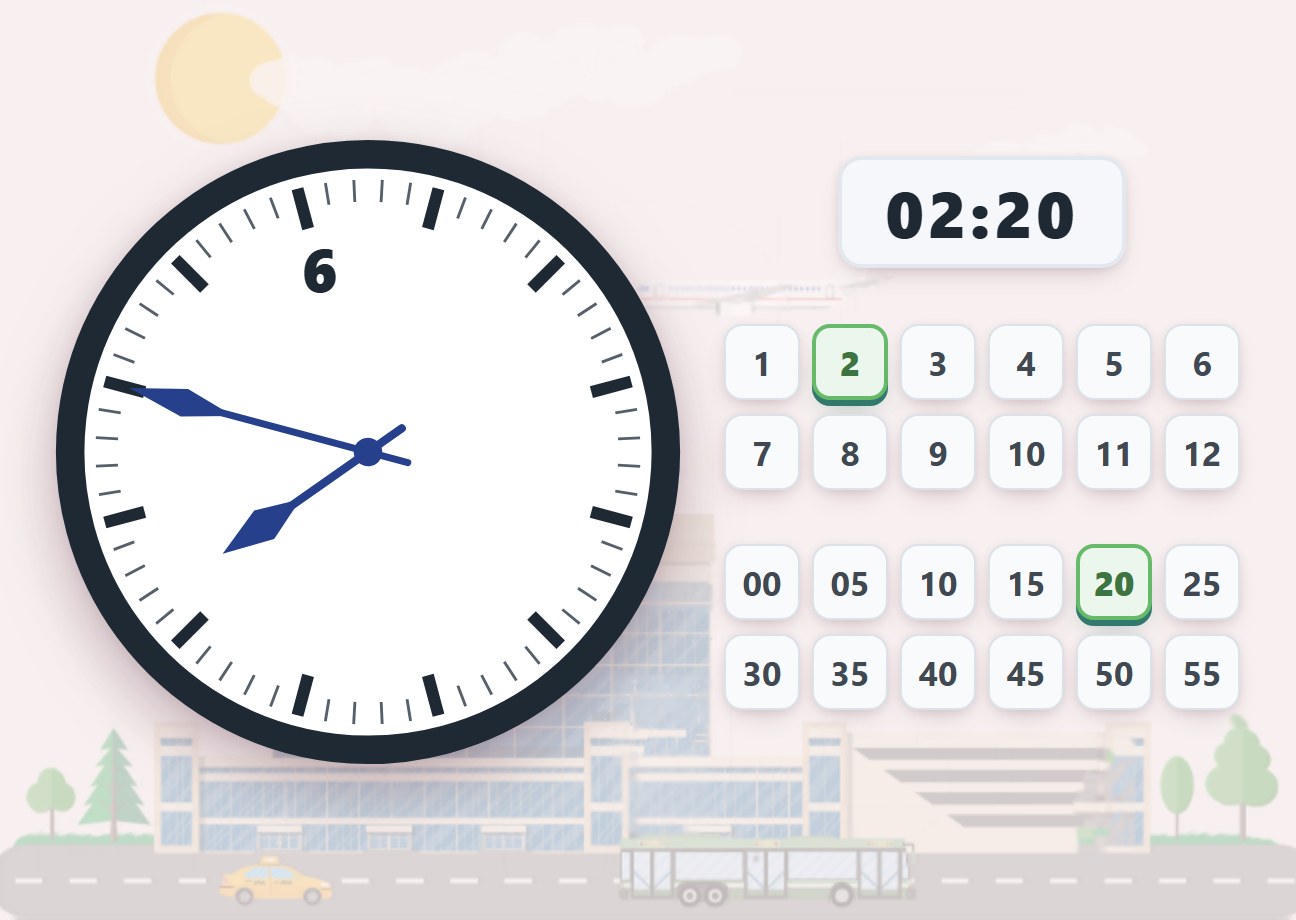
Find the twelve before you read the hands. The clock is rotated every time.
PRODeductive Logical Reasoning PRO
One symbol per row and column, one question mark, six minutes.
PROInductive Logical Thinking PRO
Six patterns, already split into two classes. Find the rule, classify four more.
PROInductive Logical Reasoning PRO
Two references obey a hidden rule. Exactly two of four candidates obey it too.
PROLogical Thinking PRO
Nine objects in a row. Eight follow one hidden rule — mark the one that does not.
PROAbstract Logical Reasoning PRO
Four panels, then a question mark — work out what comes fifth.
PRODiagrammatic Reasoning & Raven PRO
A matrix with one cell missing — find the rule, fill the gap.
PRONumerical Reasoning PRO
A data panel, one claim about it — true, false, or cannot say.
PROCube Folding PRO
Six squares, folded in your head — then find the cube.
PROADAPT: Cognitive Test PRO
Six abilities, one sitting — and the profile it leaves behind.
PROVerbal Reasoning PRO
True, False or Cannot say — and absence is never falsehood.
PROADAPT: FAST Multitasking PRO
One flight, four channels — and none of them waits.
GUIDEWizz Air Pilot Academy Guide
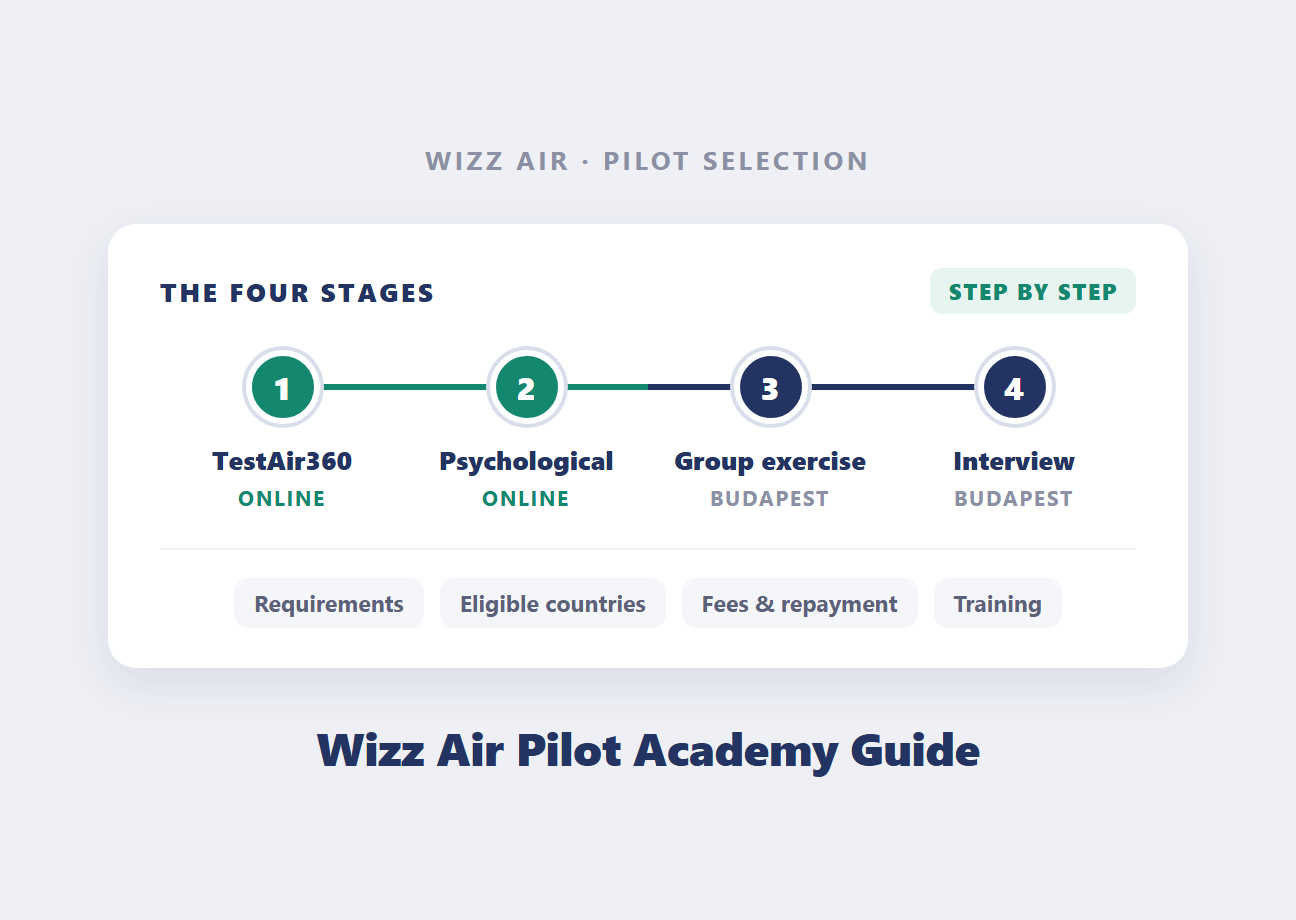
Requirements, the four selection stages, fees and repayment.